
With food insecurity on the rise, pet food banks are working to meet increased needs to help keep pets with their families.
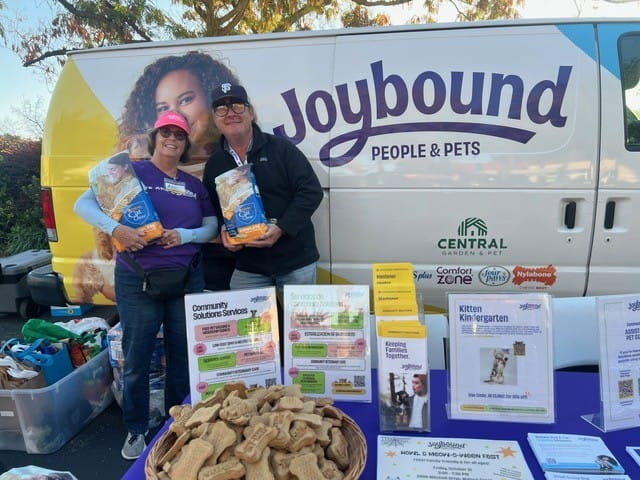
At a recent pet food bank offered by the nonprofit Joybound People & Pets in Northern California, a man named Robbie profusely thanked the staff and volunteers who gave him food for his cat, Flash. He confided that he’s been living in a tent beneath a freeway, and that Flash is his only friend – and his only reason to get up every morning.
“It touched my heart that our ‘FoodShare’ program has kept them together,” said Miguel Abi-hassan, chief programs officer at Joybound People & Pets. “He knows that his pet is secure thanks to our pet food bank.”
Joybound People & Pets operates an animal shelter as well as numerous programs to help keep pets with the people who love them, from the food bank – which started in 1998 – to vaccine clinics, a sliding scale for dog training classes and free veterinary care for pets of families facing financial hardship.
The nonprofit is based in Walnut Creek, an East Bay city in Contra Costa County – where over 108,000 residents receive Supplemental Nutrition Assistance Program (SNAP) benefits, previously called food stamps. Though SNAP benefits can’t be used to buy pet food, he noted the recent disruption to SNAP due to the government shutdown led to a higher demand for all assistance services offered by Joybound as families suddenly had less money.
So, the Joybound team is working to find ways to meet that need to help keep pets with their families.
“The first and ideal place for a pet to be is in a home, not in a shelter. So, anything we can do to keep pets in homes is absolutely a worthwhile investment and absolutely part of our jobs,” Abi-hassan said. “Pet food banks are a huge part of that, and that’s why we will forever operate a food bank.”
Last year, with sponsorship from Purina, Joybound distributed over 171,000 pounds of pet food to county residents. But with demand higher than ever, the pet food pantry shelves are running low, so the nonprofit recently launched a “Fill the Bowls” campaign to raise $20,000 to try to meet the surge in need.
Still, with the higher cost of living, inflation and price increases due to tariffs, Abi-hassan is very concerned that pets will be surrendered to animal shelters at a time when adoptions have slowed and shelters are full. So he feels now is an ideal time to donate, volunteer, foster or adopt.
“If anybody can give a dollar, a minute or just open their home temporarily, it is something we welcome,” he said. “Especially during this economic uncertainty.”
The link between pet food insecurity and pet relinquishment to animal shelters
In 2024, 4.8 million pets entered U.S. shelters, according to Julie Castle, CEO of Best Friends Animal Society, a national animal welfare nonprofit working to end the killing of dogs and cats in America’s shelters. The first half of 2025 showed a decrease in overall intake, according to data from Best Friends.
“Some of that improvement can be attributed to shelters providing resources to pet owners before they get to the point of surrender,” she said. “Programs like pet food pantries, low-cost veterinary clinics and even helping pet owners pay pet deposits as part of their rental agreements to keep pets with the families that love them rather than ending up in the shelter.”
Financial issues are always one of the top reasons why people surrender pets to shelters, she noted, so without resources like pet food pantries in place, communities often see increases in owner surrenders.
In the past 12 months, the nonprofit Colorado Pet Pantry has distributed 7.5 million meals for pets at over 100 distribution sites throughout the state, according to Executive Director Eileen Lambert, who founded the nonprofit in 2013. That means 125,000 dogs and cats received a 30-day supply of pet food over the course of the year.
“There’s just a lot of need out there right now with the uncertainty around the economy and inflation,” she said. “Pet food prices have increased 20 to 50 percent in just the past five years. … It’s all adding up to where a $50 bag of food is now costing $70 or $80, and it just makes it harder.”
The price hikes arose unexpectedly due to supply chain issues during the coronavirus pandemic, inflation and now tariffs, which Lambert said are even increasing the cost of manufacturing pet food bags.
Then the pause in SNAP benefits created a “domino effect.” At a November 3 Colorado Pet Pantry event in Greeley – the first pet food bank held after SNAP benefits were suspended – the nonprofit saw a 70% increase in requests for pet food. Meanwhile, the human food bank they’d partnered with was twice as busy as usual.
“People often tell us that they feed their animals before they feed themselves,” Lambert said. “That’s the big reason why we partner with human food pantries.”
To wit: a PetSmart Charities survey found that 83% of people facing food insecurity would forego their own meals to feed their pets. And just this month, a Bank of America Institute analysis found that nearly a quarter of all U.S. households live paycheck to paycheck.
That’s why whenever detractors ask, “Why do people have animals they can’t afford to feed?” Lambert bristles – and points out that someone’s life can change a lot in 10-15 years due to unforeseen events like a hospitalization, car accident, lost job, divorce, or taking care of elderly parents.
“Things can change,” she said. “I think it’s really heartless and naïve when people say, ‘Well, just don’t get a pet.’ Have you never had something surprise you in your life? It happens all the time.”
Lambert is grateful to donors and the more than 1,400 volunteers who help Colorado Pet Pantry get pet food to people who need help caring for their pets.
She’s also motivated by stories from the people her team helps. For instance, one client recently wrote a thank you note to the organization for helping feed her two beloved cats, sharing, “As a single working professional in a very expensive state with a high cost of living, all of my expenses are critical. My rent alone is almost half of my net monthly income – not to mention other routine and costly expenses, including groceries, which have become exorbitantly expensive.”
Rewarding Ways to Help
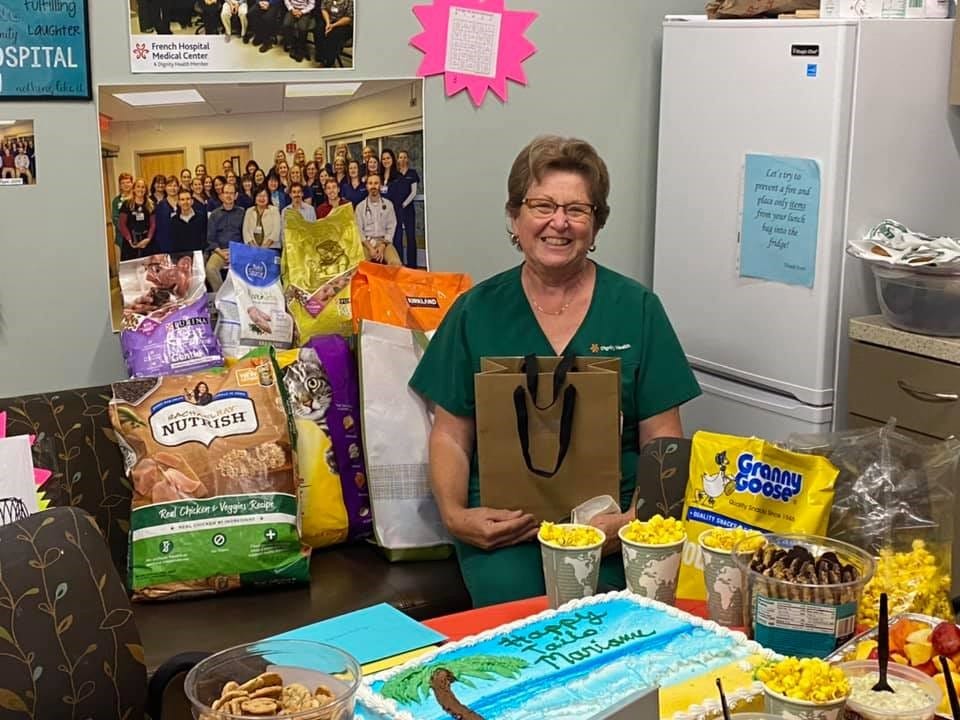
During the holidays and year-round, pet food assistance programs welcome donations and volunteers. One easy way to support the efforts of the national nonprofit Feeding Pets of the Homeless is simply to allow your business to become a pet food donation site, according to Genevieve Frederick, the organization’s founder and president.
“It could be a chiropractor, it could be a dentist, it could be a veterinary hospital, it could be a groomer, cleaners, a bank – any business that is open to the public so that the public could drop off pet food,” she said. “We send them decals and information on how to let their community know that they are now collecting pet food.”
That pet food is then counted and distributed to human food pantries, churches, homeless shelters and domestic violence shelters to help feed pets of people with low income or who are experiencing homelessness. In 2024, the nonprofit’s donation sites collected over 295,000 pounds of pet food and supplies.
Volunteers for Feeding Pets of the Homeless can transport the food to distribution sites – there are over 500 across the country – which Frederick personally enjoys.
“I have to tell you, it is so rewarding when you pull up to a food bank and your car is full of pet food,” she said. “They are so appreciative, and it just warms your heart.”
She also loves when classrooms host pet-food drives for the nonprofit, as one second-grade class on the East Coast does every year.
“It’s great because kids relate to pets, and then there’s this underlying message that not everybody has a house, like you may have,” she said. “It’s a great learning lesson for these kids.”
Frederick emphasized that people who are unhoused often form close bonds with their pets – they’re together 24 hours a day – and that for the people the nonprofit serves, pets are “not optional.”
“They are companions, emotional support, stability and often protection,” she said. “Many of our clients live outdoors, in vehicles or in temporary shelter situations. Their pets provide connection and a reason to keep going in environments that can be unsafe and isolating.”
A Free Searchable Database for Help with Pets
Americans and Canadians hoping to find help caring for their pets can search for resources – for free – by zip code at PetHelpFinder.org. The database lists over 6,000 “financially friendly” resources like pet food banks, veterinary care and boarding.
The nonprofit Open Door Veterinary Collective launched PetHelpFinder.org in 2023 and it quickly grew, according to Heather J. Cammisa, MA, CAWA, project director of PetHelpFinder.org. It’s also free to list services on the site.
“We’re hearing that they’re all experiencing a spike in demand,” she said.
She’s personally witnessed that spike as a volunteer at a pet food bank run by Colorado Pet Pantry in Montrose, Colorado. She finds it touching that some clients have taken in abandoned animals from the side of a road or are fostering pets of friends who have gone into the hospital or lost housing. Often people carpool with neighbors who no longer drive or don’t have a vehicle.
Ultimately, she said it’s beautiful to see people band together to help one another. She hopes caring people will consider ways they can get involved in helping keep pet families together.
“If you can’t donate, you can volunteer. If you can’t volunteer in a broader way, can you just drive a neighbor down to a pet food pantry? Can you share PetHelpFinder.org on your social media pages when you hear people need help? There’s so much that everyone can do because we know how much pets mean to people and their wellbeing,” she said. “And this is certainly a time of heightened need.”
Photo credit: Photos courtesy of Colorado Pet Pantry, Joybound People and Pets, Feeding Pets of the Homeless
Disclaimer: Trends content is meant to inform, educate, and inspire by providing an array of diverse viewpoints. Any content published should not be viewed as an official stance, position, or endorsement by the American Animal Hospital Association (AAHA) or its Board of Directors.


